Custom AI insights
AI Sales Proposal Assistant for Small Business: Draft Faster Without Inventing Scope or Proof
An AI proposal assistant can organize discovery notes and approved content into a useful draft without inventing scope, pricing, proof, or customer promises.
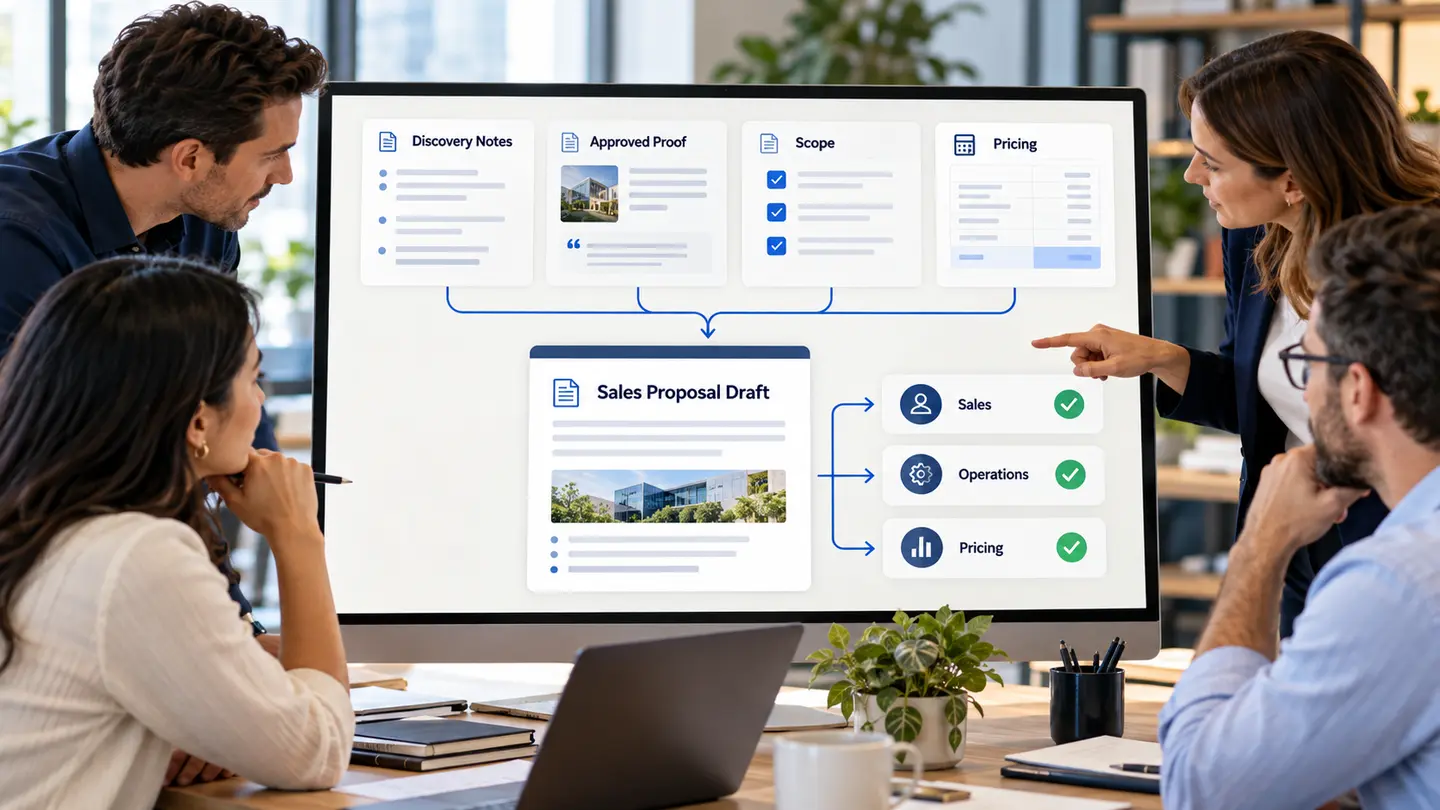
A strong sales proposal has to do several jobs at once. It must reflect what the prospect said, define the problem clearly, explain the recommended approach, separate scope from assumptions, use approved proof, and make the next step easy to understand.
That work is repetitive enough for AI to help, but consequential enough that it should not be left unsupervised.
An AI sales proposal assistant can organize discovery notes, retrieve approved service information, build a structured first draft, and check for missing details. It should not invent customer needs, create unsupported claims, choose pricing, or promise a result the business has not approved.
A Proposal Is Not Just a Longer Estimate
An estimate or quote usually focuses on price, quantities, scope, and terms. A proposal also explains why the work matters, how the approach fits the customer’s situation, and what the engagement will look like.
The proposal assistant should use the accepted estimate or pricing source when one exists. It should not turn persuasive writing into a substitute for accurate scope and commercial approval.
Start With Structured Discovery
The draft is only as useful as the information behind it. Feed the workflow approved discovery notes, the customer’s stated goals, constraints, current process, decision criteria, timing, stakeholders, and unanswered questions.
If an important point is missing, the assistant should flag it or prepare a follow-up question. It should not fill the space with a generic assumption that sounds specific to the prospect.
Separate Customer Facts From Your Interpretation
A customer may describe a problem in one way while the seller forms a reasonable interpretation of the cause or solution. The proposal should not blur those together.
A good system can label direct customer facts, internal analysis, recommended approach, and assumptions. That makes the draft easier to review and reduces the chance that an internal guess becomes a written commitment.
Use Only Approved Services, Proof, and Case Examples
AI can retrieve relevant capabilities, service descriptions, process language, case examples, and testimonials from an approved library. It can select material that appears relevant to the customer’s situation and explain why it was chosen.
It should never invent a customer name, performance result, credential, integration, timeline, or case study. If no approved proof fits, the draft should remain honest rather than manufacturing confidence.
Keep Scope, Assumptions, and Exclusions Visible
Proposal problems often begin when attractive narrative language hides an unclear scope. The system should make deliverables, responsibilities, dependencies, assumptions, exclusions, and change conditions easy to review.
The seller or project owner should approve these sections. A persuasive proposal that creates an operational promise the delivery team cannot meet is not a successful automation.
Take Pricing From an Authoritative Source
Approved pricing should come from the current estimate, price book, product catalog, or authorized person. The AI can place that information into the proposal and check whether required items are missing.
It should not calculate a discount, change payment terms, or decide that an exception is commercially sensible unless the business has a narrow, approved rule and the right person remains accountable.
Build Review Around Consequence
Routine formatting and approved language may need only a quick check. Custom scope, pricing exceptions, legal terms, security claims, implementation dates, and promised outcomes deserve closer review.
Route each section to the person who owns it. Sales may approve the customer narrative, operations may confirm delivery scope, and an authorized leader may approve pricing or contract exceptions. One generic “looks good” checkbox is not always enough.
Keep Versions and Sources Attached
Proposal revisions can create confusion when changes arrive through calls, email, and internal comments. Maintain a clear current version and preserve the source for important changes.
The assistant can summarize what changed between versions, identify which sections were affected, and flag a new commitment for review. It should not silently merge conflicting instructions.
Connect the Approved Proposal to the Next Workflow
After approval, predictable automation can save the final proposal, update the opportunity record, schedule follow-up, and prepare a project handoff if the customer accepts.
Keep the approved proposal as the source. The handoff should carry the final scope, assumptions, exclusions, contacts, and promises rather than relying on an AI summary alone.
Measure Quality, Not Just Draft Speed
Track time to first draft, revision rounds, missing-information requests, scope corrections, approval delays, and rework caused by unsupported or outdated material. Win rate may matter, but it is influenced by many factors and should not be treated as proof that the AI wrote a better proposal.
The best result is a faster, more consistent proposal that the delivery team can stand behind.
Start With One Repeated Proposal Type
Choose a service with a familiar discovery process, stable proposal structure, and clear approval owner. Build the draft from real past examples after removing stale facts and unapproved claims.
Begin with preparation and review. Add CRM or document automation only after the proposal content is reliable.
Want to Make Proposals Faster Without Making Them Generic?
If your team rewrites the same proposal structure while searching across notes, service documents, and old examples, we can help map a drafting workflow around your approved content and review process.
Build Proposals From Approved Business Context
We can help map a proposal workflow that organizes discovery, scope, proof, and pricing while keeping important commitments under review.
Describe Your Proposal Workflow ↗