Custom AI insights
What to Know Before Adding AI to Your Business
Before you add AI, get clear on the problem, information, boundaries, handoff, testing, ownership, and success measures that will determine whether the system actually works.
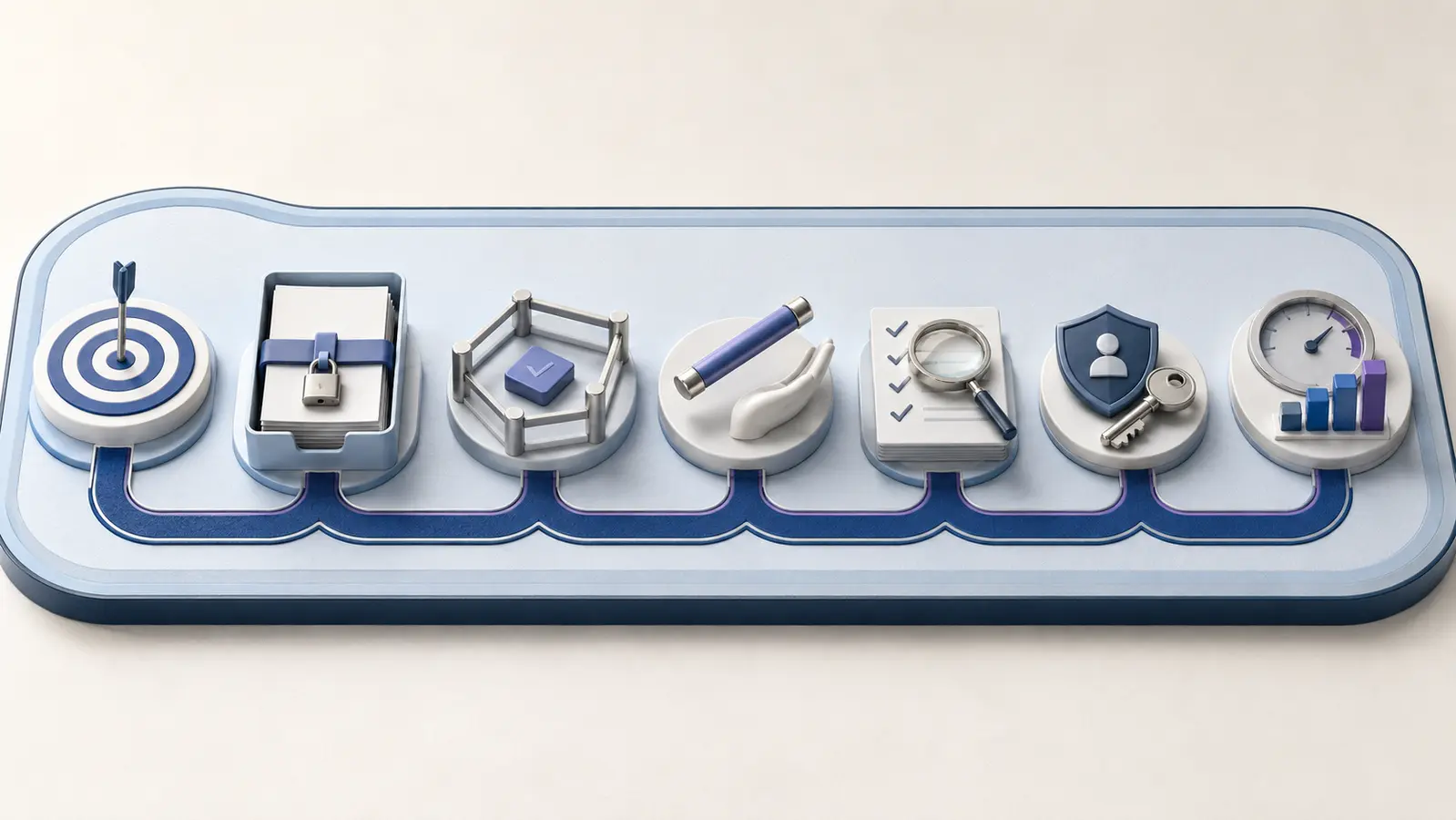
Adding AI to a business can be surprisingly easy.
Adding AI well is harder.
The difference usually has less to do with the model you choose and more to do with the process around it. A useful system needs a clear job, reliable information, sensible boundaries, and a plan for what happens when the AI is unsure.
Before you add an assistant, automation, or AI feature to your business, here are the questions worth answering first.
Start With a Problem, Not a Feature
“We should use AI” is not a business problem.
“We spend fifteen hours a week answering the same customer questions” is.
So is “good leads sit in the inbox too long,” “new employees cannot find the right procedures,” or “our team rewrites the same follow-up messages every day.”
Specific pain gives you something to design around and something to measure later.
If you cannot explain what should improve after the AI is introduced, it will be very hard to know whether the project worked.
Decide What Information the AI Is Allowed to Use
AI is only as useful as the information available to it.
For a business system, you need to decide what sources are authoritative. Which policies are current? Which service descriptions are accurate? Where does pricing information live? Which internal documents should employees be able to access?
You also need to decide what should not be included.
Sensitive information, private customer data, confidential internal material, and regulated information may require additional controls or may not belong in the system at all.
Do not treat “give the AI everything” as a strategy.
Clean Up the Process Before You Automate It
Automation magnifies whatever process you give it.
If your current workflow is confusing, inconsistent, or full of exceptions nobody understands, automating it may simply make the confusion happen faster.
Map the process first.
What triggers the task? What information is needed? What decisions are made? What should happen next? Where does a human need to step in?
Often, this exercise reveals improvements you should make even before AI enters the picture.
Set Clear Boundaries
A custom AI assistant should know what it is allowed to do.
Can it answer questions about pricing? Can it make recommendations? Can it collect personal information? Can it change an appointment? Can it promise a deadline? What happens if a customer is upset or asks about something sensitive?
Good boundaries protect the customer and the business.
A system that confidently does the wrong thing is worse than one that says, “I need to bring in a person for this.”
Plan the Human Handoff
Every useful business AI needs an exit.
There will be questions it cannot answer, customers who do not want to use it, unusual situations that require judgment, and moments where the conversation should simply belong to a person.
Decide how that handoff works before launch.
Does the system collect contact information? Notify the team? Create a summary? Route the conversation to a specific department?
A smooth handoff is part of the product, not a backup plan.
Test Real Situations, Not Just Happy Paths
It is easy to test an AI assistant by asking the questions you expect.
Customers will not cooperate.
They will misspell things, combine three questions into one message, leave out important details, change their mind halfway through, ask something unrelated, or phrase a familiar problem in a completely new way.
Testing should include those messy situations.
It should also include questions the system must refuse or escalate. You want to discover weak spots before customers do.
Decide Who Owns It After Launch
Business information changes.
Prices change. Services change. Policies change. Employees change. Software changes.
Someone needs to own the AI system after launch and know when its information or instructions need to be updated.
Without ownership, even a good system slowly becomes less accurate.
This does not necessarily require a technical employee. It requires a clear process for keeping the system current.
Measure Something That Matters
Do not measure success by how impressive the demo looks.
Measure the outcome.
Did response time improve? Did the team spend less time on repetitive questions? Did more leads complete intake? Did employees find information faster? Did missed follow-ups decline?
Choose a small number of meaningful measures tied to the original problem.
That makes it easier to improve the system and easier to decide whether to expand it.
Start Smaller Than Your Imagination
Once people see what AI can do, the temptation is to automate everything.
Resist it.
Pick one useful workflow, build it carefully, learn how your customers and team actually use it, and expand from evidence.
A small system that people trust is a better foundation than a huge system nobody understands.
Thinking About Adding AI?
The best first step is to map the process you want to improve. If you know where your business is losing time or creating friction, we can help you determine whether AI is the right tool and what a sensible first version should look like.
Ready to find the right AI use case?
We can help you map the workflow, choose a practical starting point, and design a custom system around the way your business actually works.
Start a Conversation ↗Explore Custom AI