Custom AI insights
Custom AI vs. ChatGPT: What’s the Difference?
ChatGPT is a powerful general-purpose tool. Custom AI is built for repeatable business jobs. Here is how they differ and when each one makes sense.
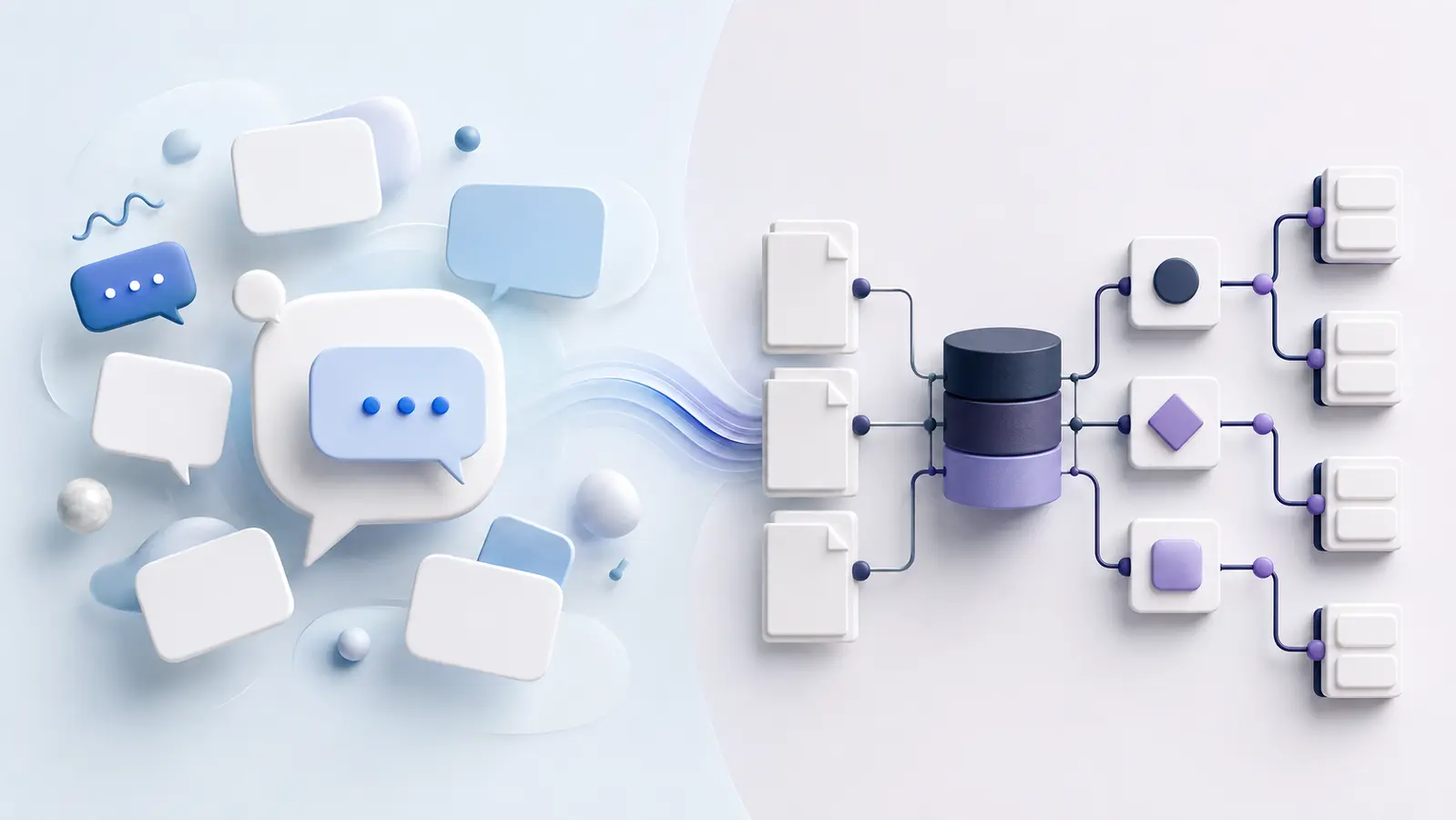
If you have used ChatGPT, you already know how useful general-purpose AI can be. You can ask it to write, explain, brainstorm, summarize, and help you think through a problem.
So why would a business ever need a custom AI system?
The difference is not that one is “real AI” and the other is not. The difference is what the system knows, how it behaves, what it connects to, and what job it is designed to do.
ChatGPT Is a General-Purpose Tool
ChatGPT is designed to be useful across an enormous range of topics. That flexibility is its strength.
You can use it to draft an email, compare ideas, build a checklist, explain a concept, or help with research. But unless you give it the right context, it does not automatically know your business rules, your service process, your pricing logic, your preferred tone, or what information you want collected from a customer.
For individual work, that may be perfectly fine. You provide the context and use the answer.
A custom AI assistant is built for a narrower job.
Custom AI Is Built Around Your Business
A custom AI system can be designed around information you approve.
That might include your services, FAQs, policies, product information, internal procedures, sales process, qualification rules, or knowledge base. It can also be given clear instructions about what it should do, what it should never do, and when it should hand a conversation to a person.
Instead of asking an employee to paste the same background into a new chat every time, the system starts with the business context already in place.
That makes the experience more consistent.
A Custom System Can Follow a Workflow
This is one of the biggest differences.
A normal AI conversation is usually open-ended. A custom system can be designed to move through a specific process.
For example, a lead-generation assistant might greet a visitor, identify what service they need, collect a few qualifying details, answer basic questions, and then route the lead to the correct next step.
An internal assistant might help an employee find a policy, explain the procedure, draft the correct response, and link them to the source material.
The AI is not simply answering questions. It is helping complete a job.
It Can Use the Right Sources
Businesses need answers they can trust.
A custom assistant can be grounded in approved documents and information rather than relying only on a general model’s knowledge. That is especially important when the answer depends on your own business rather than general information from the internet.
If your refund policy says one thing, your AI should not improvise another.
Good custom systems are designed to prefer the information you provide and to admit when the answer is not available.
It Can Be Connected to Other Tools
This is where custom AI becomes much more than a chat window.
Depending on the use case and the systems involved, AI can be connected to forms, databases, customer relationship tools, scheduling systems, internal knowledge, messaging workflows, or other software your business already uses.
That makes it possible for the assistant to help move work forward instead of simply talking about it.
The exact integrations depend on the business, but the principle is simple: useful AI should fit into your workflow instead of becoming one more disconnected tool.
You Control the Rules and Boundaries
A business assistant needs more structure than a casual personal chat.
You may want it to avoid discussing certain topics, never quote pricing without required information, collect specific details before making a recommendation, or transfer sensitive situations to a human.
Those rules can be part of the system design.
That does not make AI perfect. It does make it more predictable and much better suited to a real business process.
So Which One Do You Need?
For many tasks, regular ChatGPT is enough.
If you want help drafting something, thinking through an idea, researching a topic, or getting a quick second opinion, a general AI assistant is incredibly useful.
Custom AI becomes more valuable when the same task happens repeatedly, multiple people need the same reliable behavior, customers will interact with the system, business-specific information matters, or the AI needs to connect with a workflow.
A simple rule is this: use general AI when you need a smart tool. Consider custom AI when you need a repeatable system.
The Best Choice Is the One That Solves a Real Problem
There is no prize for having the most complicated AI setup.
The right question is not “How much AI can we add?” It is “Where are we wasting time, losing leads, creating avoidable friction, or repeating work?”
If a general-purpose tool solves that problem, use it. If the problem needs your business knowledge, your rules, your workflow, and consistent execution, that is where a custom assistant starts to make sense.
Want to Find the Right Fit?
If you are trying to figure out whether your business needs a simple AI tool or a custom system, we can help you map the problem first and choose the simplest solution that actually works.
Ready to find the right AI use case?
We can help you map the workflow, choose a practical starting point, and design a custom system around the way your business actually works.
Start a Conversation ↗Explore Custom AI