Custom AI insights
Custom AI vs. Off-the-Shelf AI: Which Is Right for Your Business?
Do not build custom AI for a problem an existing tool already solves. Build when your workflow, data, rules, or integrations are where the real value lives.
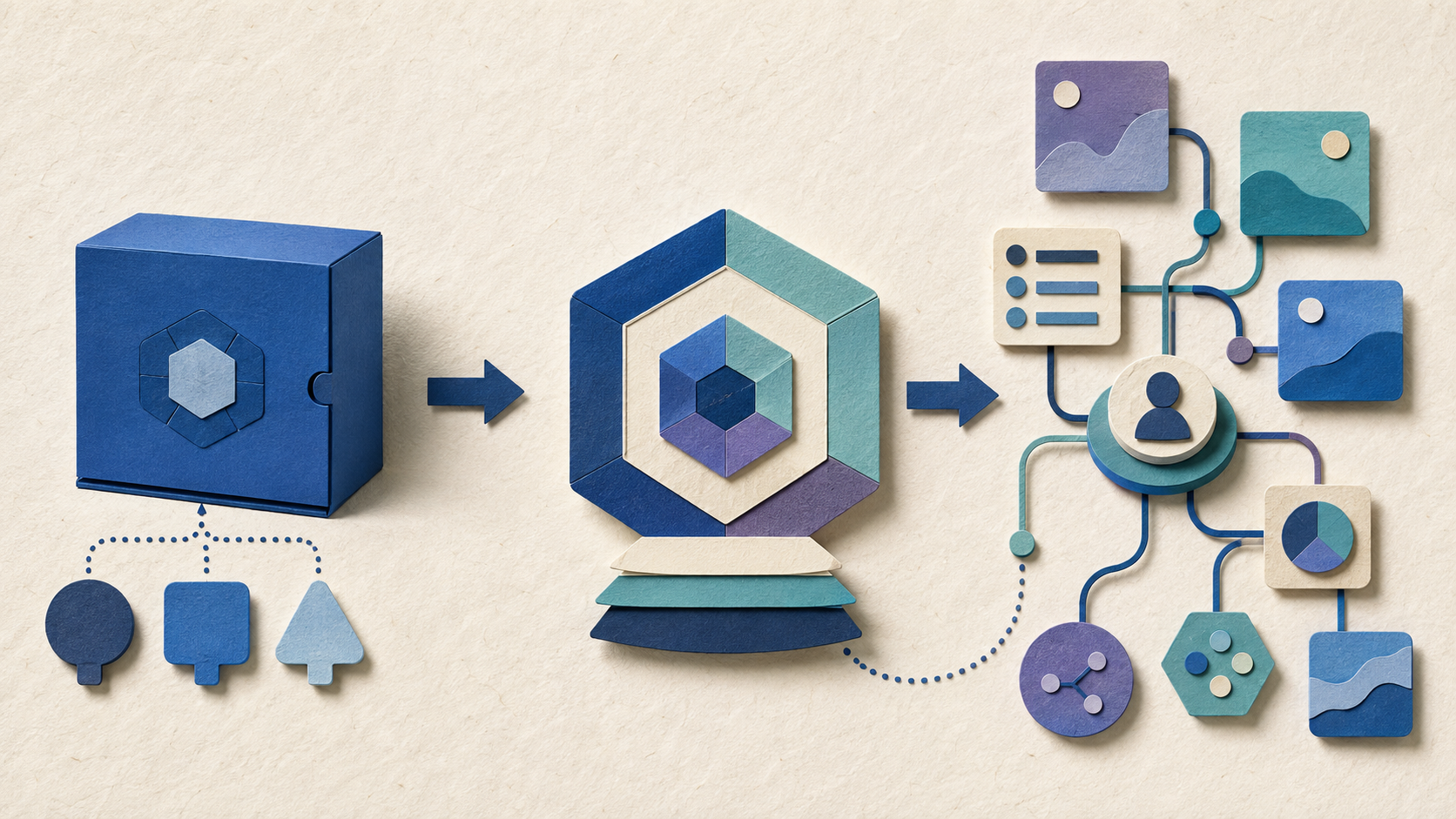
Not every business that wants AI needs custom software.
That may sound strange coming from a company that builds custom AI systems, but it is one of the most important decisions to get right.
Off-the-shelf tools are faster, cheaper, and often excellent at common jobs. Custom AI becomes worthwhile when the problem is specific enough that adapting the business to a generic tool creates more friction than building around the real workflow.
The best answer is sometimes buy, sometimes build, and very often a combination.
What Counts as Off-the-Shelf AI?
Off-the-shelf AI includes general tools and packaged products that are designed to work for many customers.
Examples include general chat assistants, meeting-note tools, standard website chatbots, AI features inside CRMs, email assistants, scheduling platforms, and common automation products.
The advantage is obvious: they already exist. You can test them quickly, compare prices, and avoid paying to recreate a solved problem.
If your need is generic, that is usually a good thing.
When Off-the-Shelf AI Is the Better Choice
Choose an existing tool when the job is common and the workflow can reasonably adapt to the product.
Drafting emails, summarizing meetings, basic transcription, standard scheduling, simple FAQ chat, and common CRM features are often available without custom development.
Start there when the product meets the need, the data and security terms are acceptable, and your team can use it without complicated workarounds.
Custom does not automatically mean better.
When Custom AI Starts to Make Sense
Custom AI becomes more attractive when the value comes from your specific process, data, rules, or integrations.
Maybe the assistant needs to understand your internal documents, follow a multi-step intake process, connect several systems, use company-specific approval rules, preserve a particular customer experience, or produce an output that packaged tools cannot support cleanly.
The more the business keeps saying 'we can use this tool, but only if we change five things about how we work,' the stronger the case for a custom layer becomes.
The Integration Question Matters
Many businesses do not need a brand-new AI application. They need existing tools to work together better.
A custom workflow can sit between email, a CRM, calendars, forms, databases, internal documents, or other software and use AI only where interpretation is needed.
That is often more practical than replacing the whole stack.
Good custom AI should fit the business where possible, not force the business to rebuild itself around the AI.
A Hybrid Approach Is Often Best
Buying and building are not opposites.
A custom system may use existing AI models, APIs, databases, phone providers, or automation platforms while adding the business-specific logic that ties them together.
That keeps you from paying to reinvent commodity infrastructure while still giving you a workflow designed for your needs.
The custom value is often in the orchestration, permissions, knowledge, guardrails, and interface rather than training a new model from scratch.
Compare Total Friction, Not Just Subscription Price
An off-the-shelf product may look inexpensive until employees spend hours moving data around it or managing workarounds.
A custom system may have a higher upfront cost but reduce recurring manual work.
Compare software fees, setup time, employee time, integration effort, maintenance, lock-in, training, error cleanup, and the cost of the problem you are trying to solve.
The cheapest tool is not always the lowest-cost solution, and the most expensive build is not automatically the highest-value one.
Questions to Ask Before You Build
Before approving custom development, ask whether the workflow is stable enough to define, whether the problem is valuable enough to measure, whether existing tools have been tested, what data and integrations are required, who will own the system, and what happens when the AI is uncertain.
If those answers are fuzzy, the project probably needs more discovery before more technology.
Do Not Build Custom AI Just to Have Custom AI
A small, boring solution that works is better than an impressive system nobody trusts.
If a $30 tool solves the problem, use the $30 tool.
If the problem is important, unique, and expensive enough that generic software keeps failing, then custom AI may be the right investment.
The decision should come from the workflow.
Need Help Deciding Whether to Buy or Build?
If you have a process you want to improve, you do not need to know the answer before the first conversation.
Custom AI By Design can help map the workflow, identify what existing tools already solve, and determine whether a custom layer would create enough value to justify building it.
Not sure whether you need custom AI at all?
Bring us the workflow. We’ll help separate what an existing tool can solve from what would actually benefit from a custom system.
Discuss Your AI Project ↗