Custom AI insights
AI Market Research Assistant: What It Can Organize Before You Trade
A custom AI research assistant can organize scattered market information into a repeatable pre-trade brief while keeping source verification and decisions with the trader.
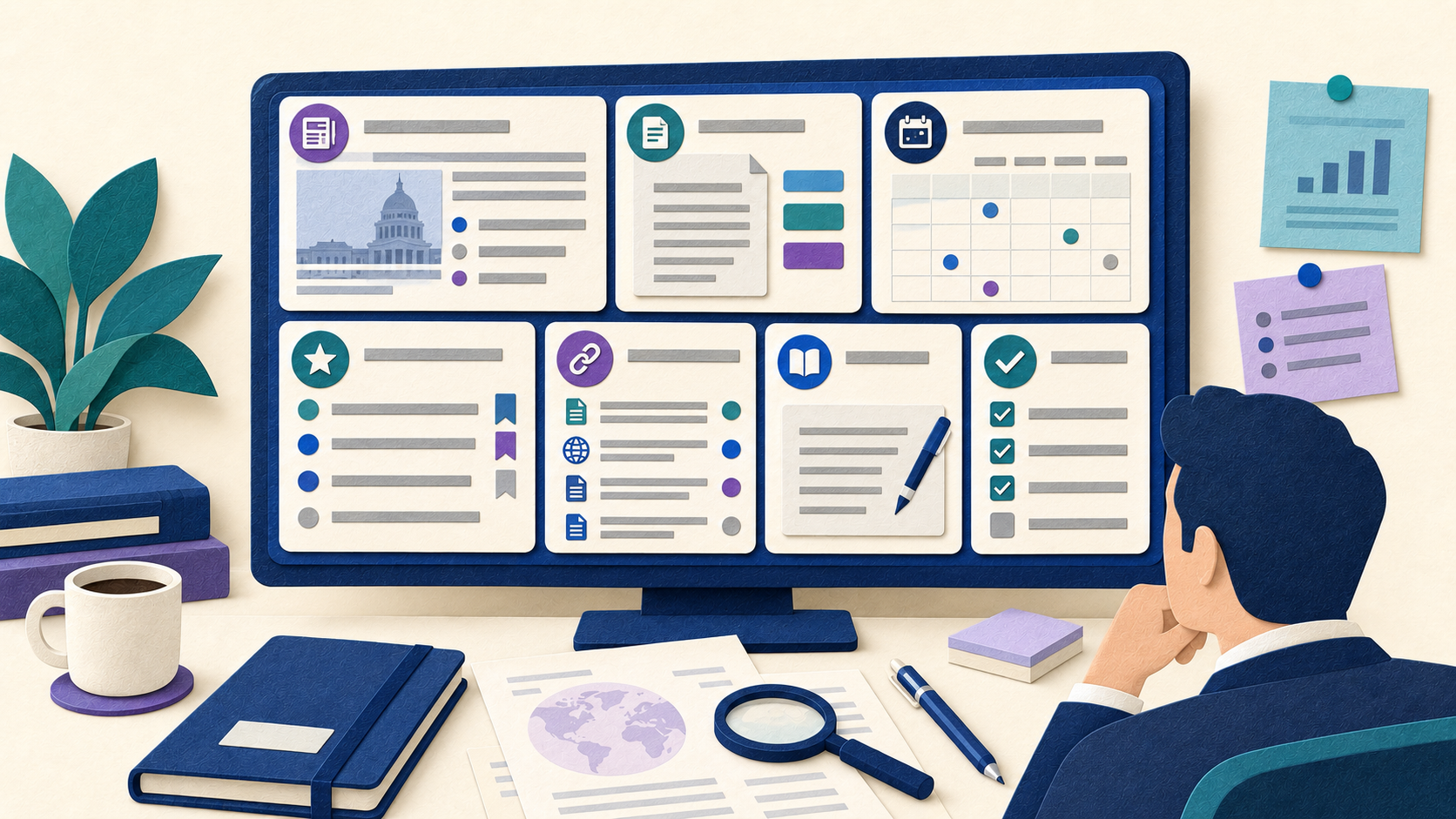
Market research can become a collection problem before it becomes an analysis problem.
A trader may watch economic calendars, earnings, filings, news, sector movement, watchlists, technical levels, prior notes, and a personal checklist. The information exists, but it is scattered across tabs, feeds, documents, and memory.
A custom AI market research assistant can help organize that information into a repeatable pre-trade workflow.
It should not be positioned as a machine that predicts the market. Its value is helping the trader gather, structure, compare, and retrieve information more consistently.
What a Market Research Assistant Can Gather
Depending on the data sources available, an assistant can help collect and organize items such as company news, scheduled earnings, economic events, public filings, watchlist notes, sector context, prior trade observations, and user-defined technical levels.
The important part is source discipline.
The assistant should make it clear where information came from, when it was published or updated, and whether a source is current enough for the intended use.
Build a Repeatable Pre-Trade Brief
Instead of starting from a blank page each time, the assistant can populate a consistent research template.
A brief might include the instrument, scheduled events, recent material news, broader market context, sector context, user-defined levels, prior journal notes, open questions, and the trader's own checklist.
The template should reflect the trader's process. AI should organize the research, not invent a new trading methodology.
Separate Facts From Interpretation
This distinction matters in market research.
A filing date, earnings time, reported revenue, or scheduled economic release is a factual item. A statement that the news is bullish, bearish, important, or likely to move price is interpretation.
A useful assistant should preserve that difference and cite or link back to source material where possible.
If the system summarizes interpretation from a third-party source, it should not present that opinion as an objective fact.
Use AI to Compare, Not to Pretend It Knows the Future
AI can help compare current information with a trader's saved framework.
For example, it can check whether a scheduled event conflicts with the trader's rule about holding through earnings, surface previous journal notes about the same ticker, or show which checklist items remain unanswered.
It can also summarize differences between multiple sources.
None of that means the assistant knows what price will do next.
Watch for Stale Data
Market information has a short shelf life.
A research assistant should show timestamps and avoid blending old and new information without warning.
If a data source is delayed, unavailable, or not real-time, the system should say so clearly.
This is especially important when the user assumes a conversational interface is automatically connected to live market data.
Do Not Confuse a Language Model With a Market Data Feed
A model can be excellent at organizing text while having no direct access to current quotes, order books, filings, news, or economic releases unless those sources are explicitly connected.
A custom system should define its data connections instead of letting the interface imply capabilities it does not have.
If real-time or licensed market data is required, the availability, permissions, cost, and limitations of that data source become part of the system design.
Use Your Own Watchlists and Rules
The research assistant becomes more useful when it understands what the trader actually tracks.
That may include preferred sectors, watchlist categories, setup definitions, event filters, risk rules, research questions, or a checklist for deciding whether an instrument deserves more attention.
The system can retrieve and organize those materials without turning them into automatic trade instructions.
Preserve Sources for Review
A polished summary is convenient, but traders should be able to inspect the underlying source when it matters.
Whenever possible, keep links, document references, timestamps, or citations with the summary.
That makes it easier to verify important facts and reduces the risk of treating an AI-generated paraphrase as the original source.
What a Market Research Assistant Should Not Do
It should not promise winning trades, claim it can reliably forecast market direction, manufacture certainty from conflicting sources, or issue personalized buy and sell recommendations.
It also should not hide missing or delayed data.
The assistant is a research and organization layer. The trader remains responsible for analysis, decisions, execution, and risk.
Start With One Research Routine
A good first build can be narrow.
Choose one workflow such as a morning watchlist brief, an earnings-prep checklist, a pre-trade company research summary, or a review of saved journal notes before a setup.
Define the sources, required fields, timestamps, and questions. Test whether the output actually saves research time without removing verification.
Educational Trading Disclaimer
This article is for educational and informational purposes only. It is not investment advice, financial advice, or a recommendation to buy or sell any security or financial instrument. Trading involves risk, including the risk of loss. AI-generated research should be independently verified and should not replace the trader's judgment or responsibility.
Want a Research Assistant Built Around Your Trading Workflow?
If your pre-trade research is spread across too many tabs, notes, feeds, and checklists, a custom assistant can help organize the routine.
Custom AI By Design can help connect approved sources, your own rules, watchlists, and journal context into a research workflow that keeps decisions with you.
Want your market research organized around your process?
Tell us which sources, watchlists, notes, and checklists you use. We can help design a research assistant that organizes the work without pretending to make the trading decision for you.
Discuss Your Trading Assistant ↗